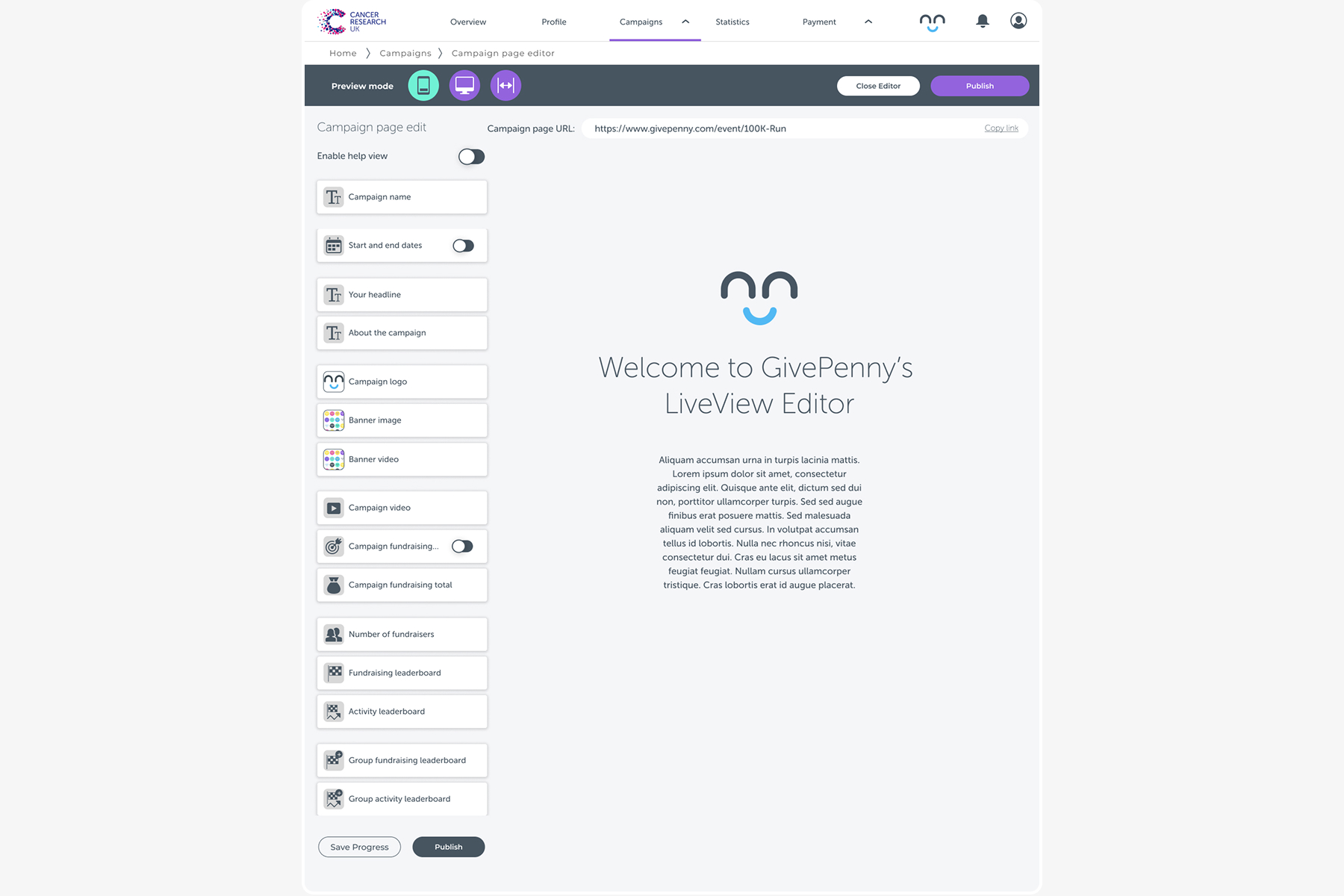

I partnered with the team to clarify how fundraisers create campaigns, translating user needs and constraints into a simpler, more guided setup experience.
SEARCH AND PRESS ENTER
Project in brief
Despite strong acquisition, many users dropped off during campaign setup due to complexity and lack of guidance, resulting in low retention and high support demand.
The challenge was improving activation and self-service within a three-month delivery window, while aligning with a separate agency-led visual redesign already in progress.
A guided WYSIWYG editor reduced friction during campaign creation, contributing to a 30% increase in acquisition and a 60% reduction in support tickets.

GivePenny Lee Clark
Graham brought clarity at a point where we needed to move fast but make the right calls. He helped us identify why users were dropping off, challenged assumptions, and designed a solution that significantly improved activation and reduced support demand. He added value well beyond execution and was a trusted partner during an important phase of the product.
My role
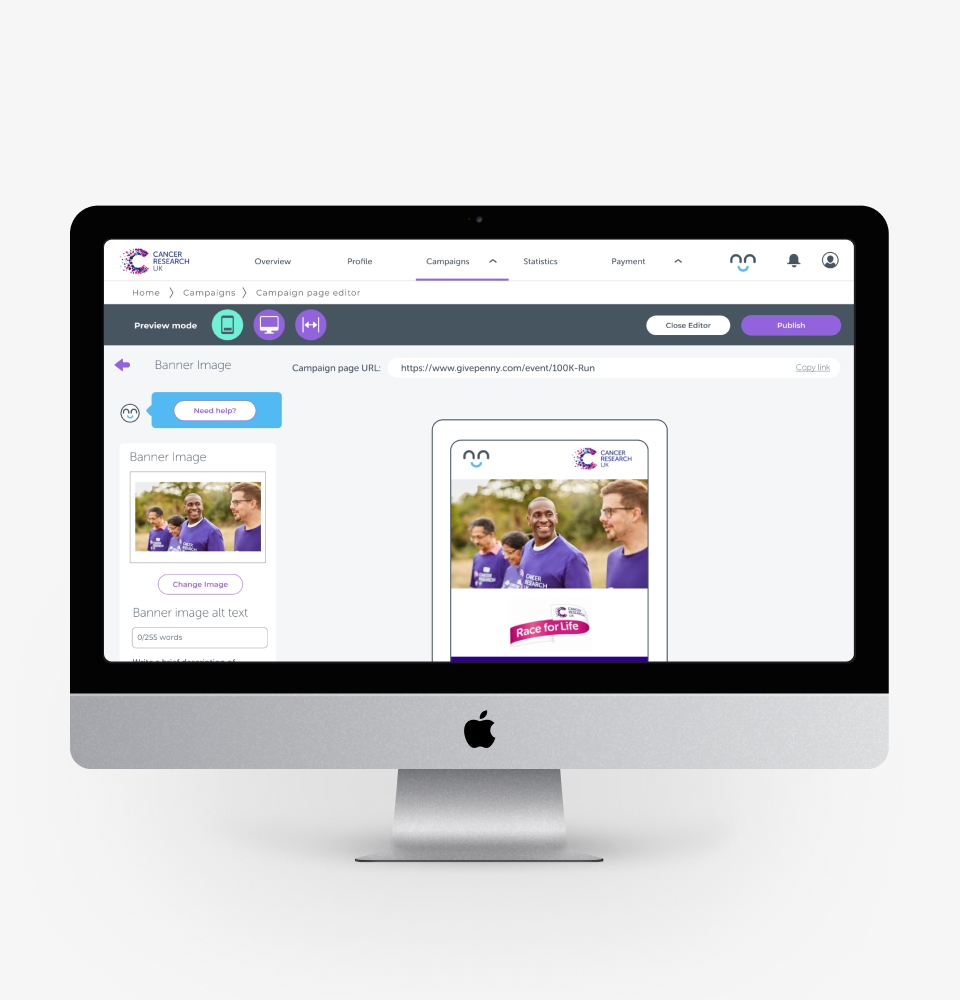
I partnered with the GivePenny team to clarify a critical early-stage product decision: how fundraisers create and manage campaigns without friction or support dependency.
My role focused on identifying why users dropped off after sign-up and translating those insights into a clearer, more intuitive campaign-creation experience within tight delivery constraints.
Problem
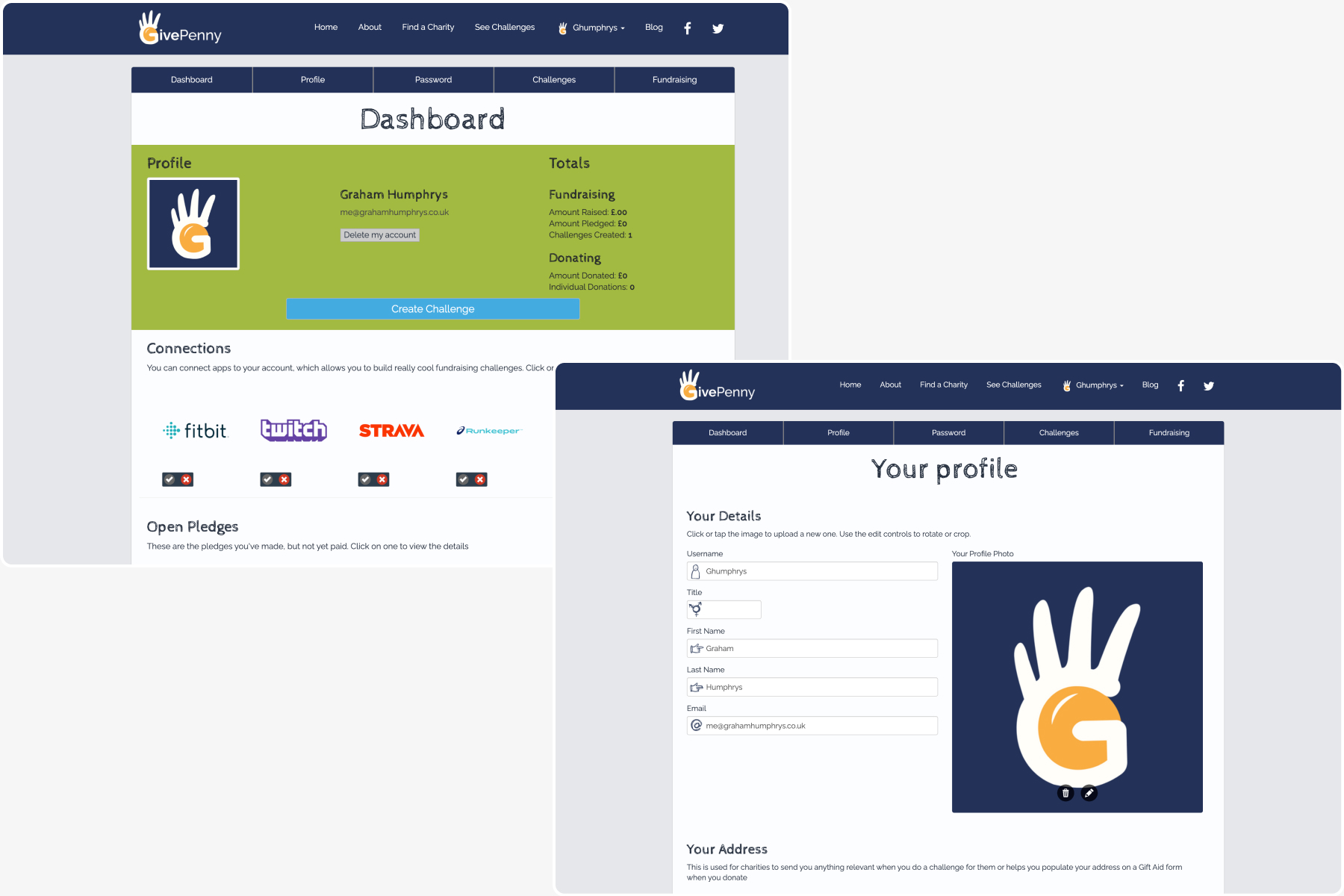
GivePenny was successfully acquiring users, but many fundraisers failed to progress beyond initial setup. Campaign creation felt complex and unintuitive, leading to low retention and a high volume of support requests.
This friction at a key activation moment limited the platform’s ability to convert initial interest into sustained usage.
Designing a self-serve fundraising platform for charities
Challenges
The core challenge was improving campaign setup clarity without slowing delivery or disrupting parallel workstreams.
This required:
- Designing a simpler, more guided creation experience that reduced cognitive load for non-technical users.
- Working within a three-month timeframe while aligning with a separate agency-led visual redesign already in progress.
The solution needed to reduce support dependency while remaining flexible enough to support future feature expansion.
Manual fundraising workflows limiting speed and scale
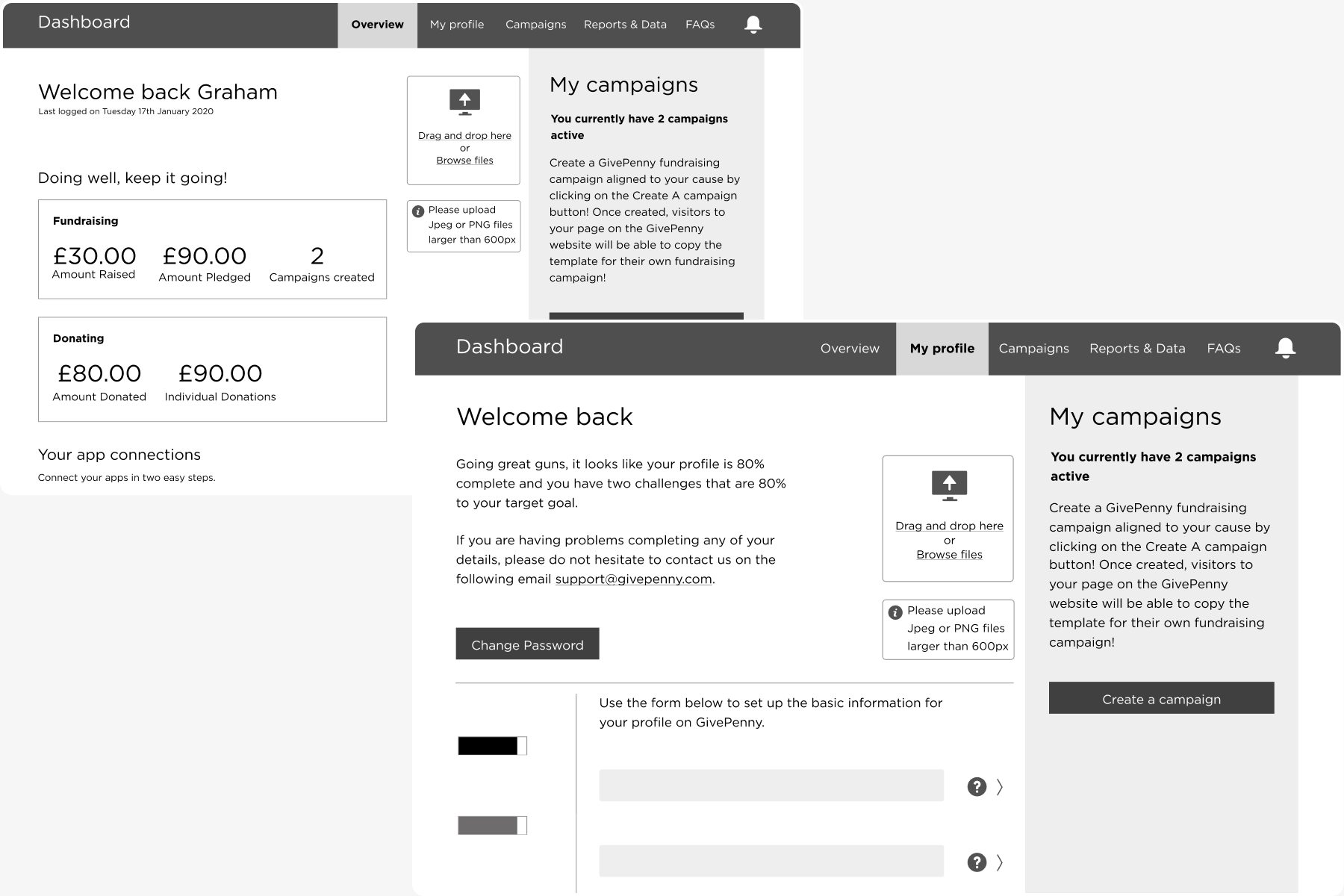
Enabling non-technical users to launch campaigns independently
Outcome
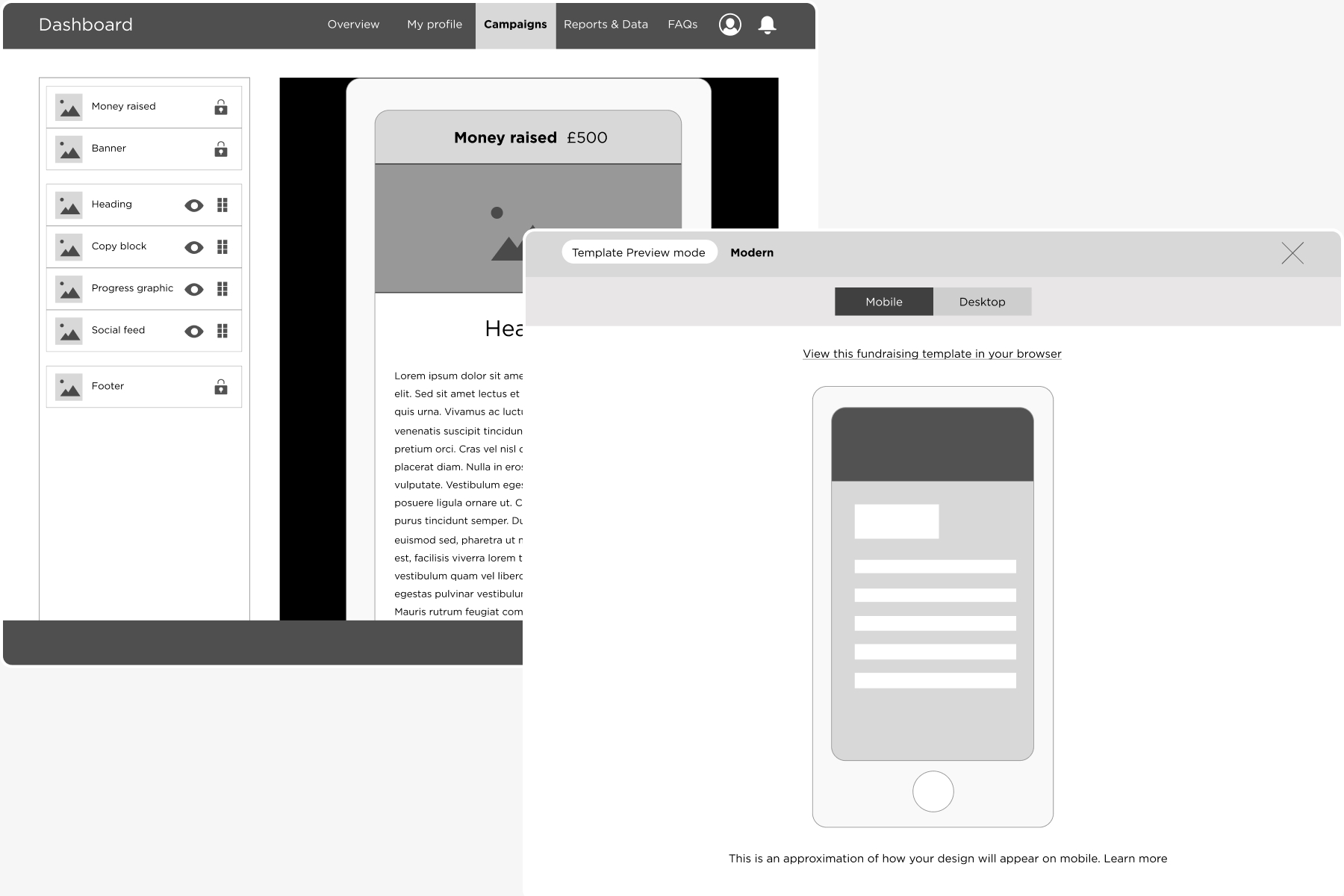
Two approaches were explored: a traditional form-based flow and a WYSIWYG editor inspired by familiar tools such as Shopify. The WYSIWYG approach was selected and enhanced with a guided “Help Mode” using a brand mascot to support first-time users.
This significantly improved confidence during campaign setup, contributing to:
- A 30% increase in user acquisition
- A 60% reduction in support tickets, indicating clearer self-service behaviour
- Higher-quality sign-ups from charities with clearer intent
- Stronger positioning for growth and partnerships
The work established a scalable foundation for future GivePenny product development.
A scalable platform empowering charities to self-serve
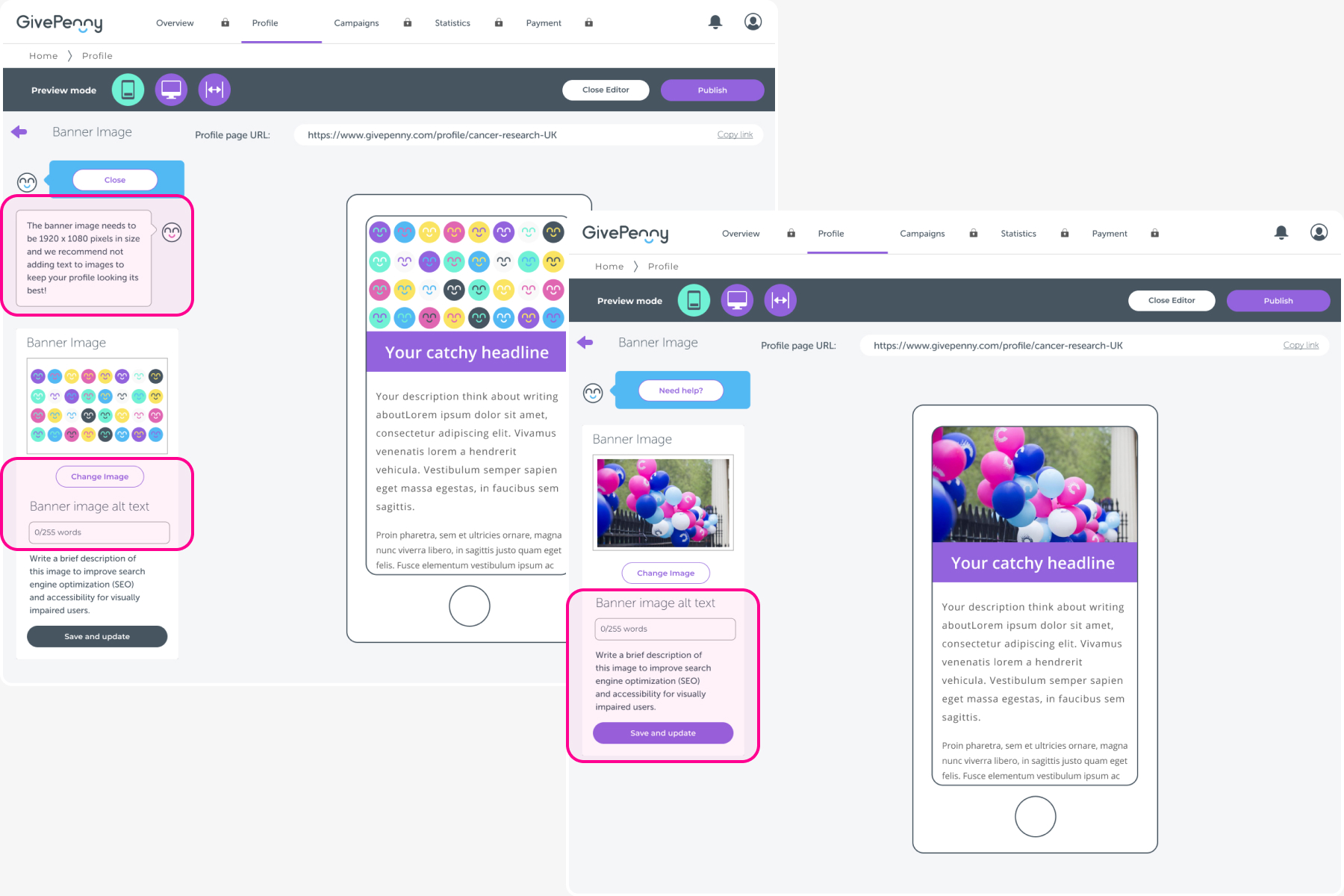
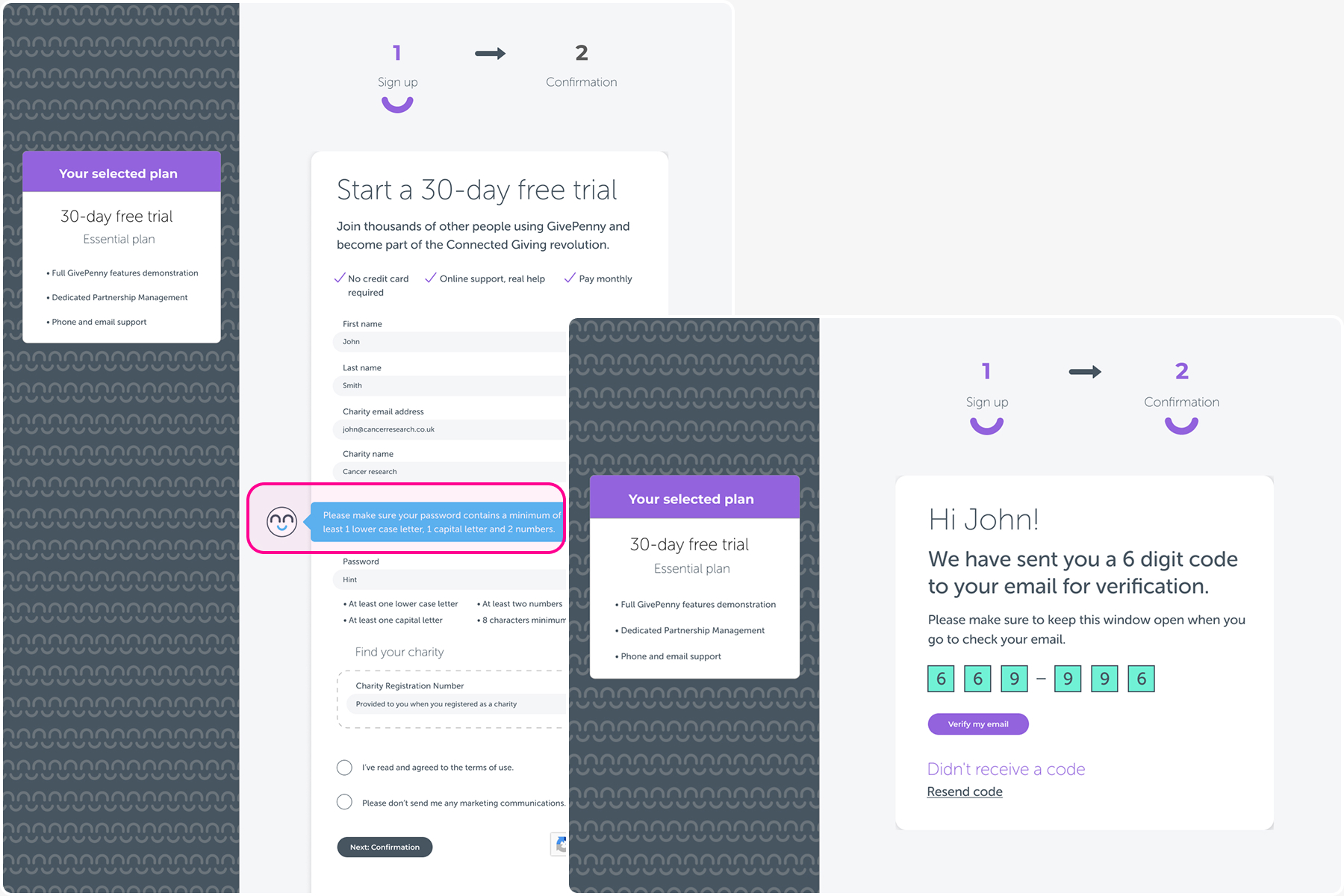
Onboarding experience
Reusable components supporting rapid campaign creation
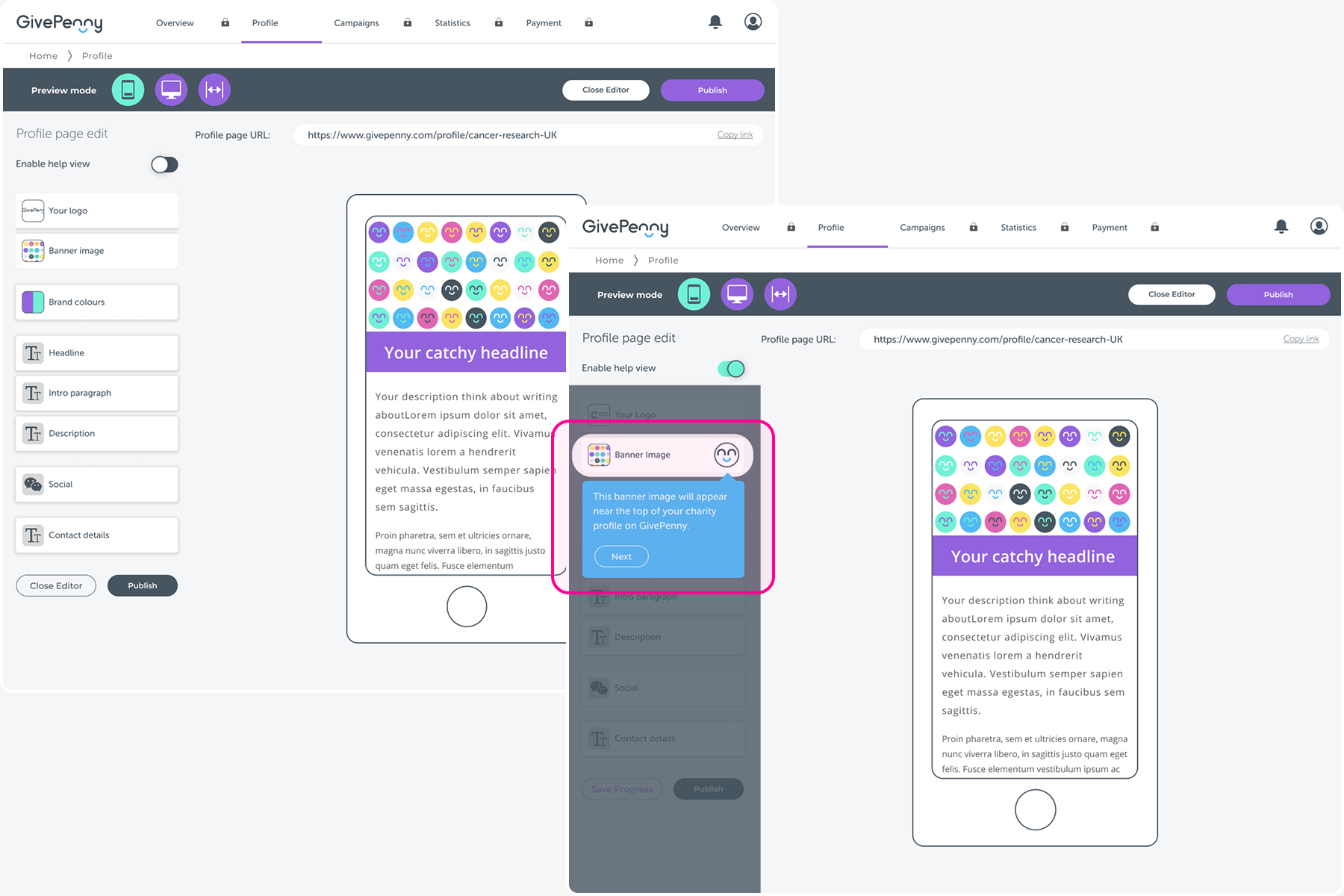
A production-ready SaaS platform supporting long-term growth