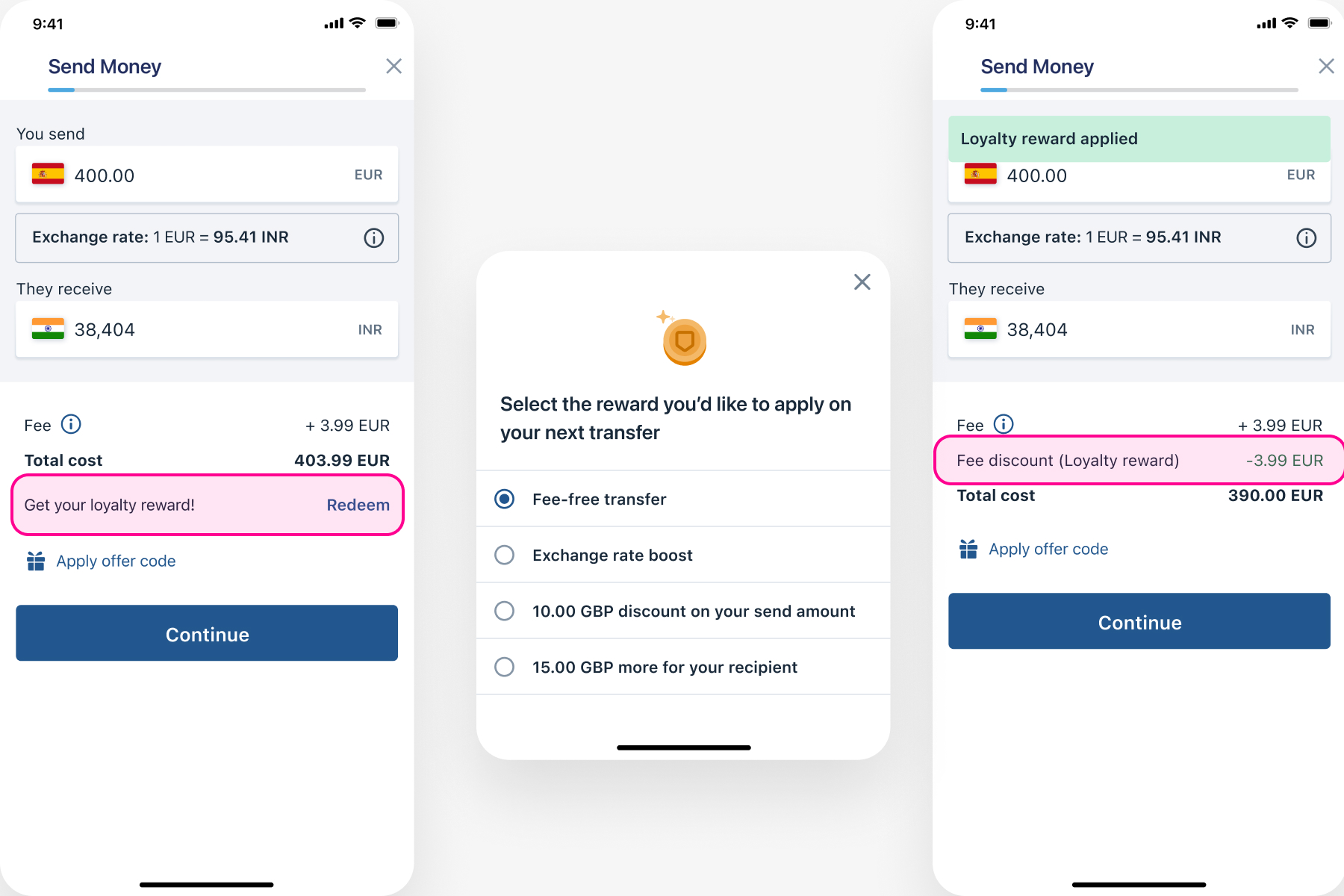

I led UX/UI design for Remitly’s Loyalty Program MVP, from concept through validation and user testing.
SEARCH AND PRESS ENTER
Remitly – Loyalty
Driving repeat transfers through a cross-market loyalty experience
Project in brief
Remitly needed to assess whether a loyalty programme could drive retention without adding friction to core transaction flows.
Designing a low-lift MVP using existing components while validating user interest quickly.
Strong user validation informed a strategic business decision to deprioritise Loyalty in favour of initiatives with faster feedback cycles.

Remitly UK Ltd Konstantinos Penlidis
It’s been a pleasure working with Graham over the past 14 months. As a senior product designer, he consistently brought clarity and structure to complex remittance journeys and helped us deliver thoughtful, well-validated solutions.
Graham is dependable, collaborative, and comfortable working from early concept through to final delivery. He works closely with product and engineering partners, handles feedback constructively, and can always be relied on to move work forward. He’s a genuinely strong contributor and a great person to work with.
My role
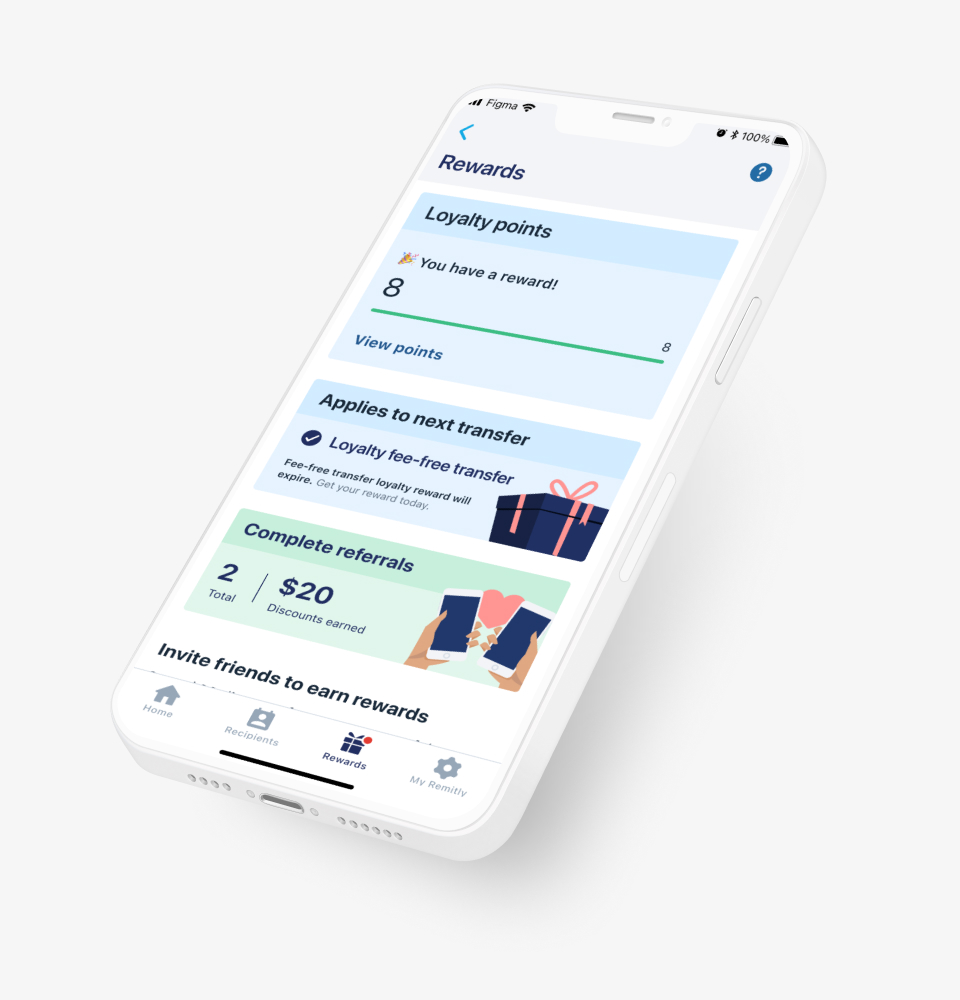
I led UX/UI design for Remitly’s Loyalty Program MVP, focused on improving customer retention through a lightweight rewards experience. This included defining the rewards entry point, designing the Rewards dashboard, validating concepts through user testing, and collaborating closely with product and engineering to ensure feasibility within MVP constraints.
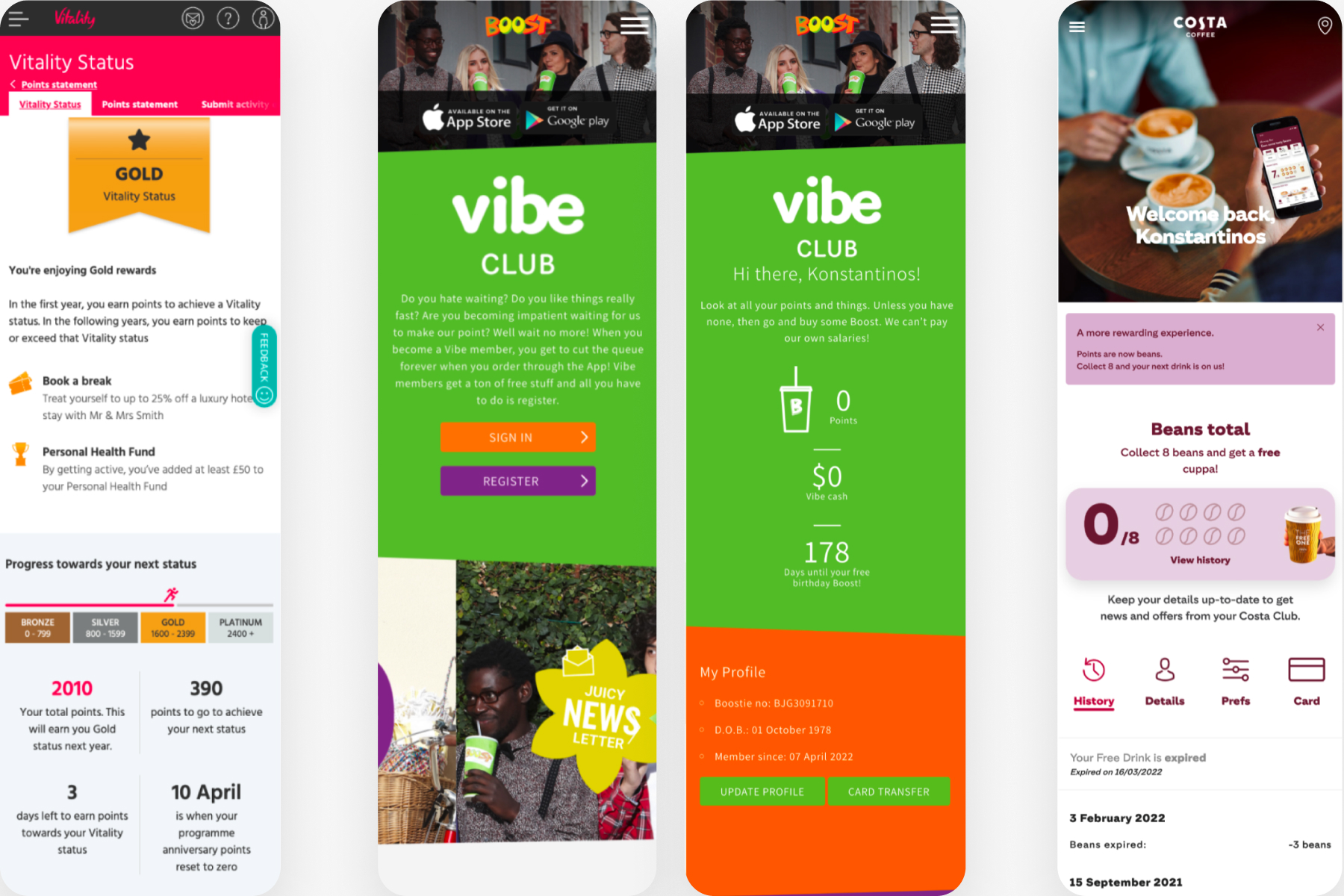
Exploring loyalty concepts across markets and customer segments
Problem
Remitly wanted to explore whether a loyalty programme could meaningfully improve customer retention, particularly around repeat transactions. The challenge was introducing rewards in a way that felt intuitive, low-friction, and tightly integrated into existing money transfer journeys.
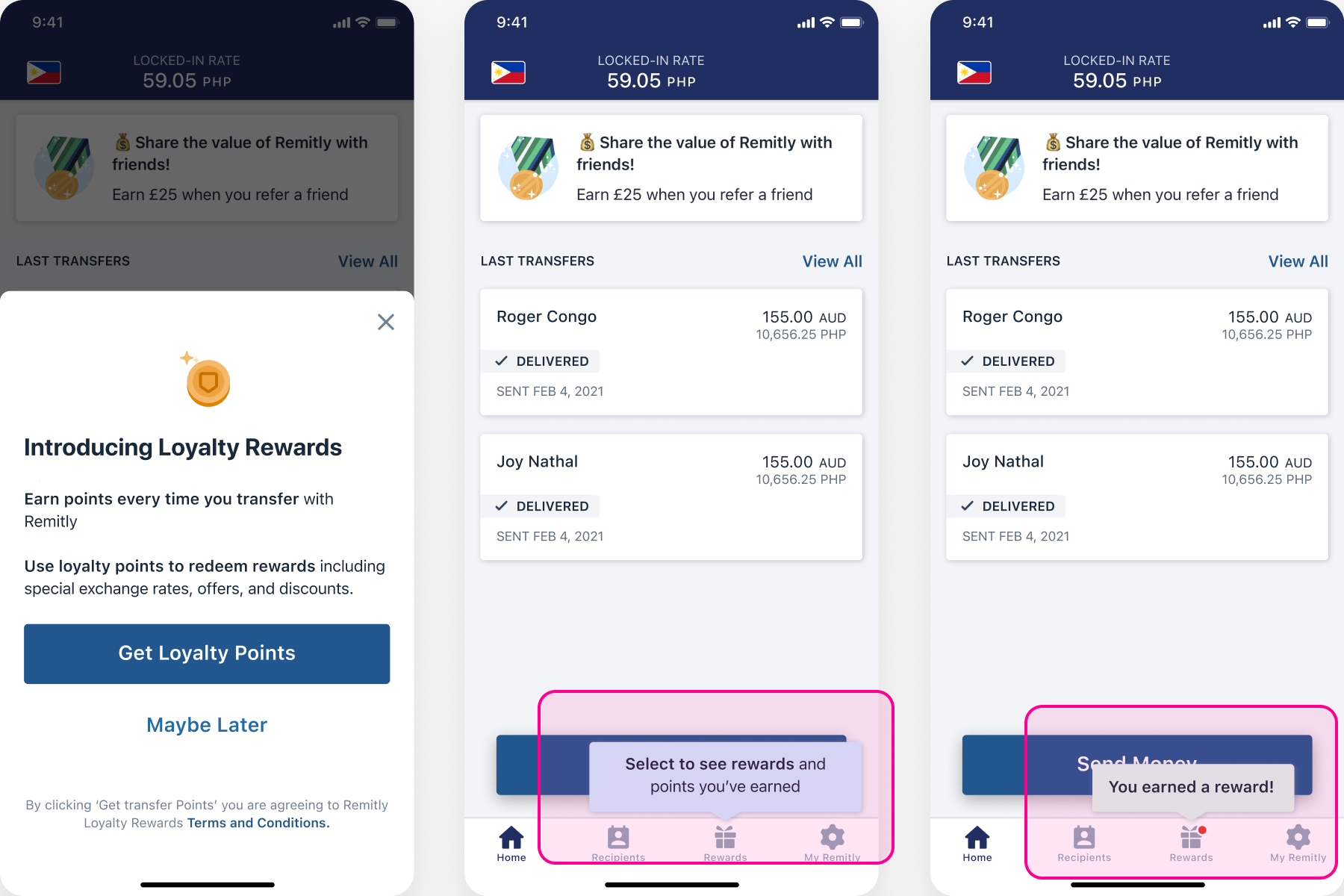
Testing where and how rewards should surface in-flow
Challenges
The project required balancing ambition with MVP pragmatism:
- Designing a rewards experience that worked within existing UI components and navigation patterns.
- Minimising development effort by reusing current screens while maintaining clarity and discoverability.
- Validating user interest quickly to inform business prioritisation decisions.
Balancing visibility, motivation, and transactional clarity
Outcome
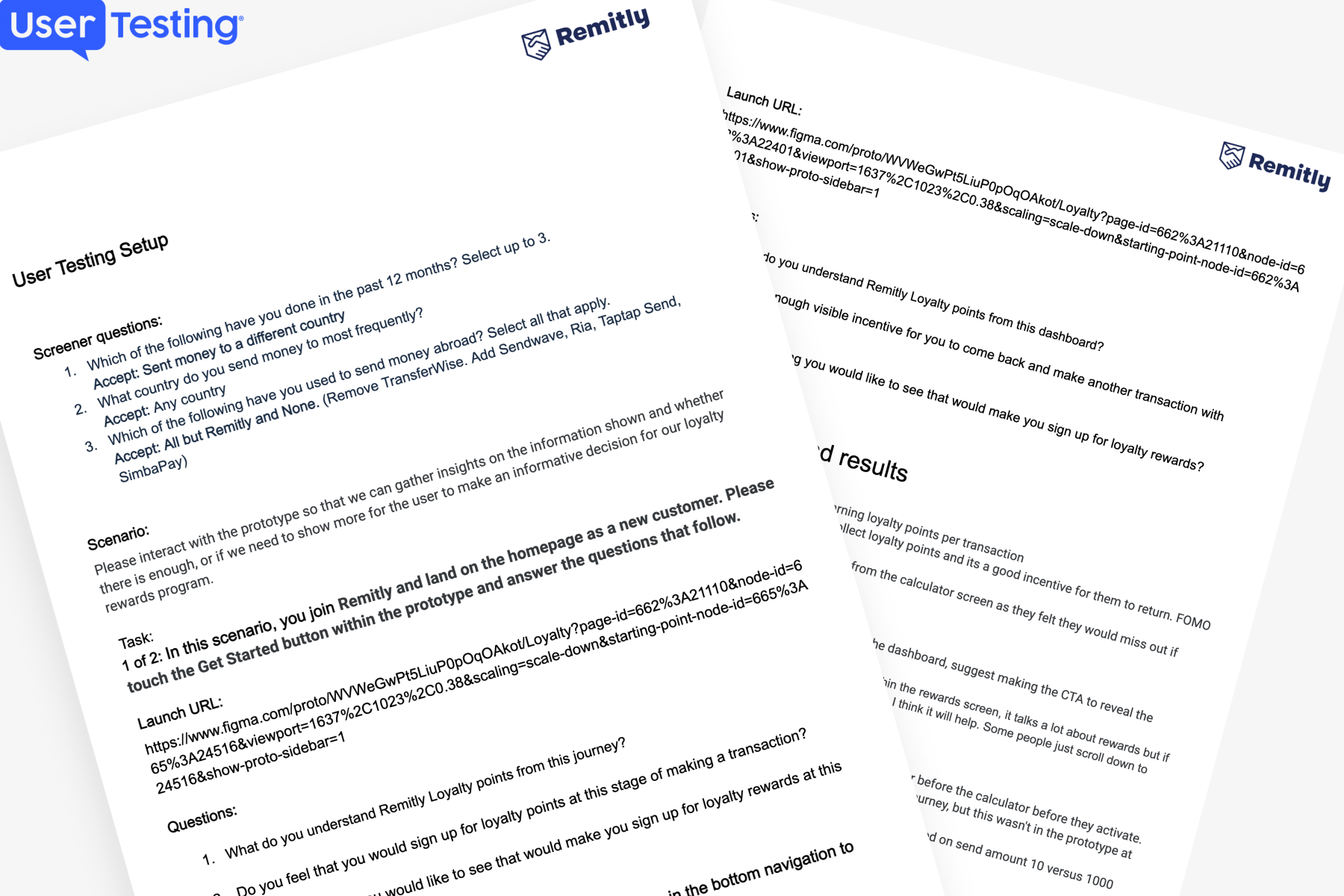
User testing showed strong validation of the concept, with 80% of participants interested in collecting loyalty points and 70% preferring activation directly from the calculator screen.
While modelling suggested a potential revenue impact of $2.5M–$15M, the business ultimately deprioritised the Loyalty Programme in favour of initiatives with shorter feedback loops. This decision reflected the longer timeframe required to assess loyalty performance, rather than a lack of user or design validation.
Validated interest in a loyalty-led retention mechanic