
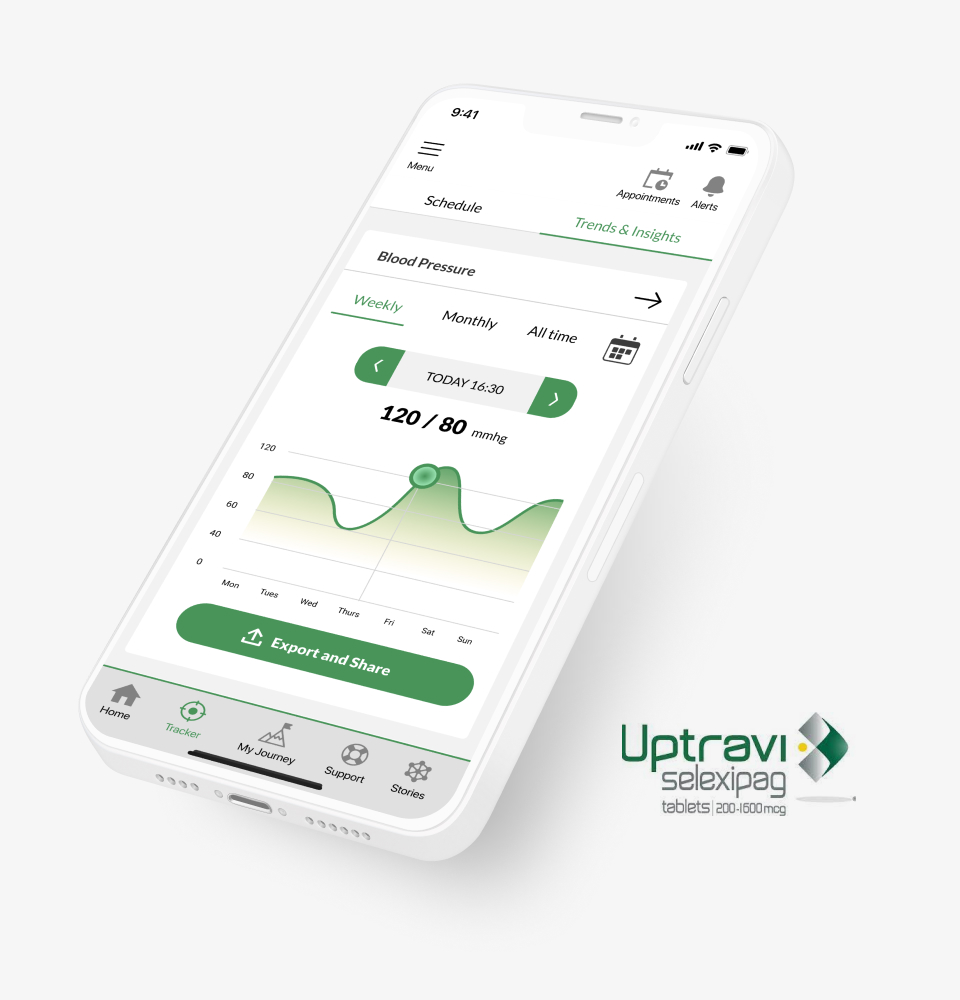
I led UX/UI design for a proof-of-concept health app supporting patients using Uptravi, from research through wireframes.
SEARCH AND PRESS ENTER
Janssen – Uptravi
Proving patient support journeys through a health companion proof of concept app
Project in brief
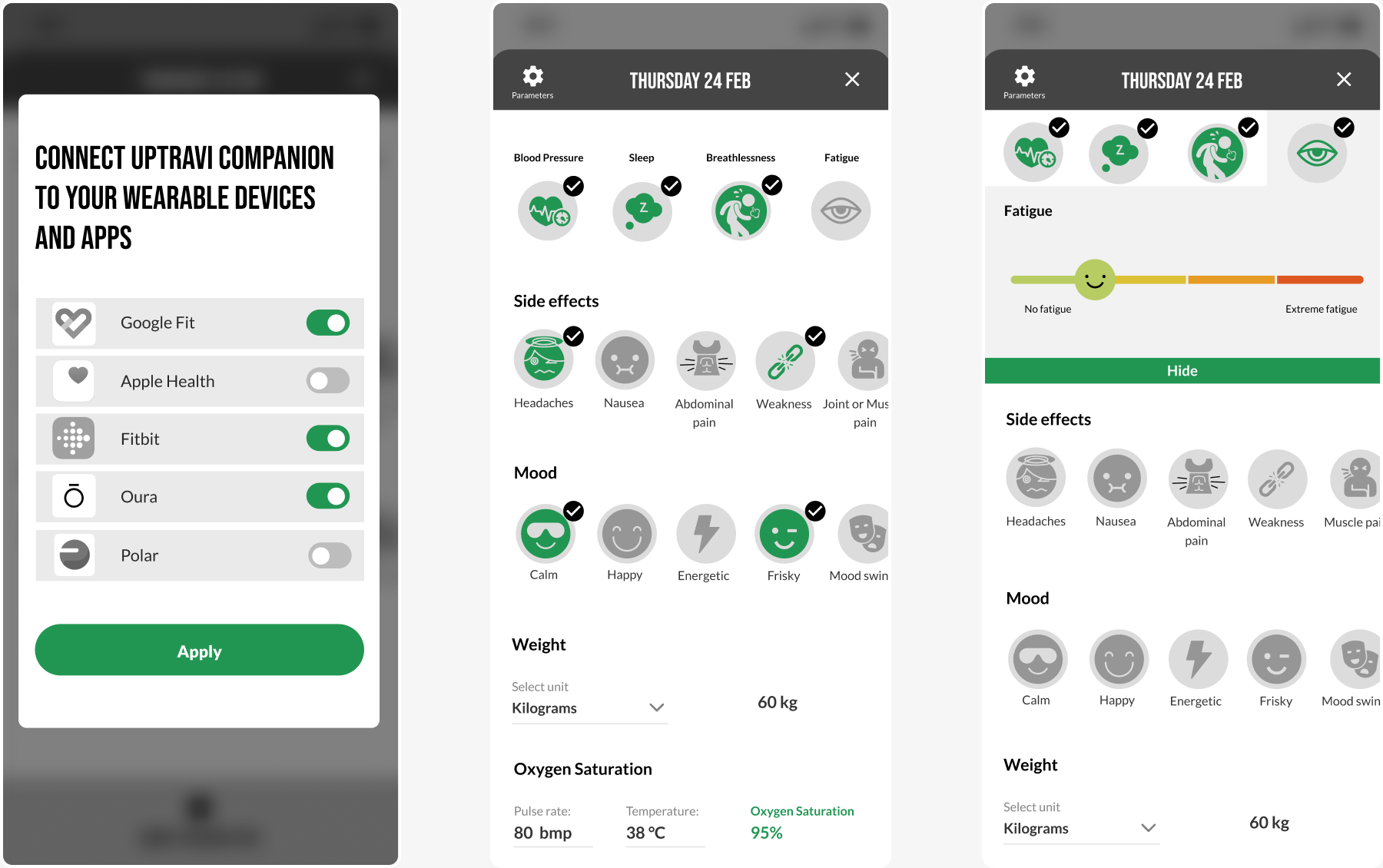
Patients and clinicians lacked a simple way to track side effects and emotional wellbeing during complex medication titration.
Designing for vulnerable users, clinical accuracy, and global accessibility within regulatory and budget constraints.
A validated proof of concept demonstrating how digital tools could improve patient support and clinician insight, despite paused development.

Janssen - Uptravi Henna Phipps
Working with Graham was a very positive experience. He quickly understood the clinical context and designed an experience that was both empathetic to patients and practical for healthcare professionals.
His structured approach, clarity of thinking, and ability to collaborate remotely made him a trusted contributor throughout the proof-of-concept phase.
My role
I led UX/UI design for a proof-of-concept health app designed to support patients taking Uptravi, a medication used to treat pulmonary arterial hypertension. My role included research, persona creation, UX definition, wireframing, and collaboration with clinical and pharmaceutical stakeholders to ensure medical accuracy and usability.
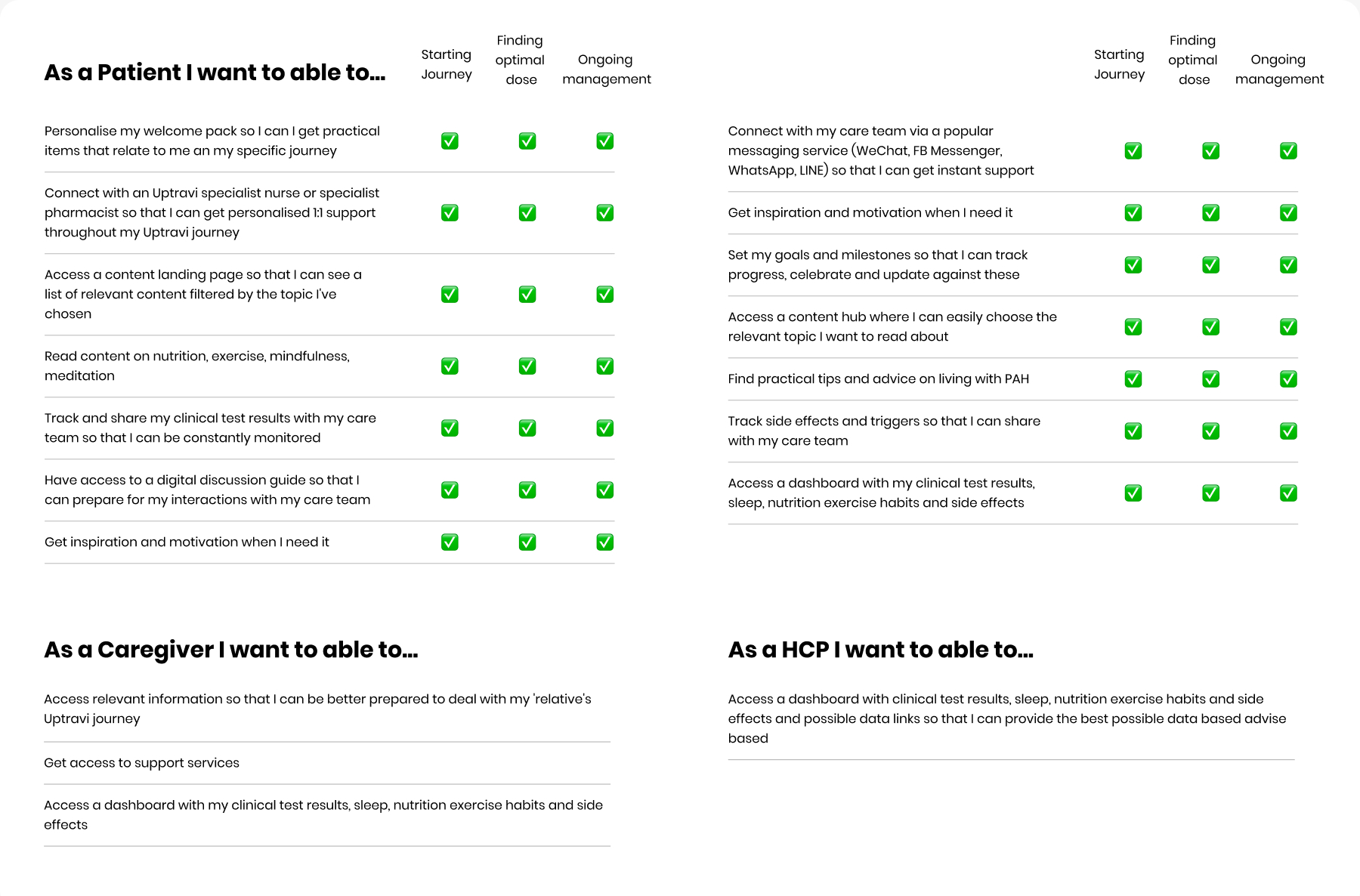
Patient journey audit and feature gap analysis
Problem
Patients taking Uptravi often experience severe side effects while titrating to their optimal dose. These effects can be difficult to track, communicate, and contextualise during clinical check-ins, creating challenges for both patients and healthcare professionals when managing treatment progression.
Cross-functional research and patient insight workshops
Challenges
The project faced several complex constraints:
- Designing for a vulnerable patient group experiencing physical and emotional side effects.
- Balancing patient simplicity with clinically meaningful data for healthcare professionals.
- Creating a globally accessible solution without reliance on advanced or region-specific technology.
- Working within strict regulatory, medical, and budget constraints.
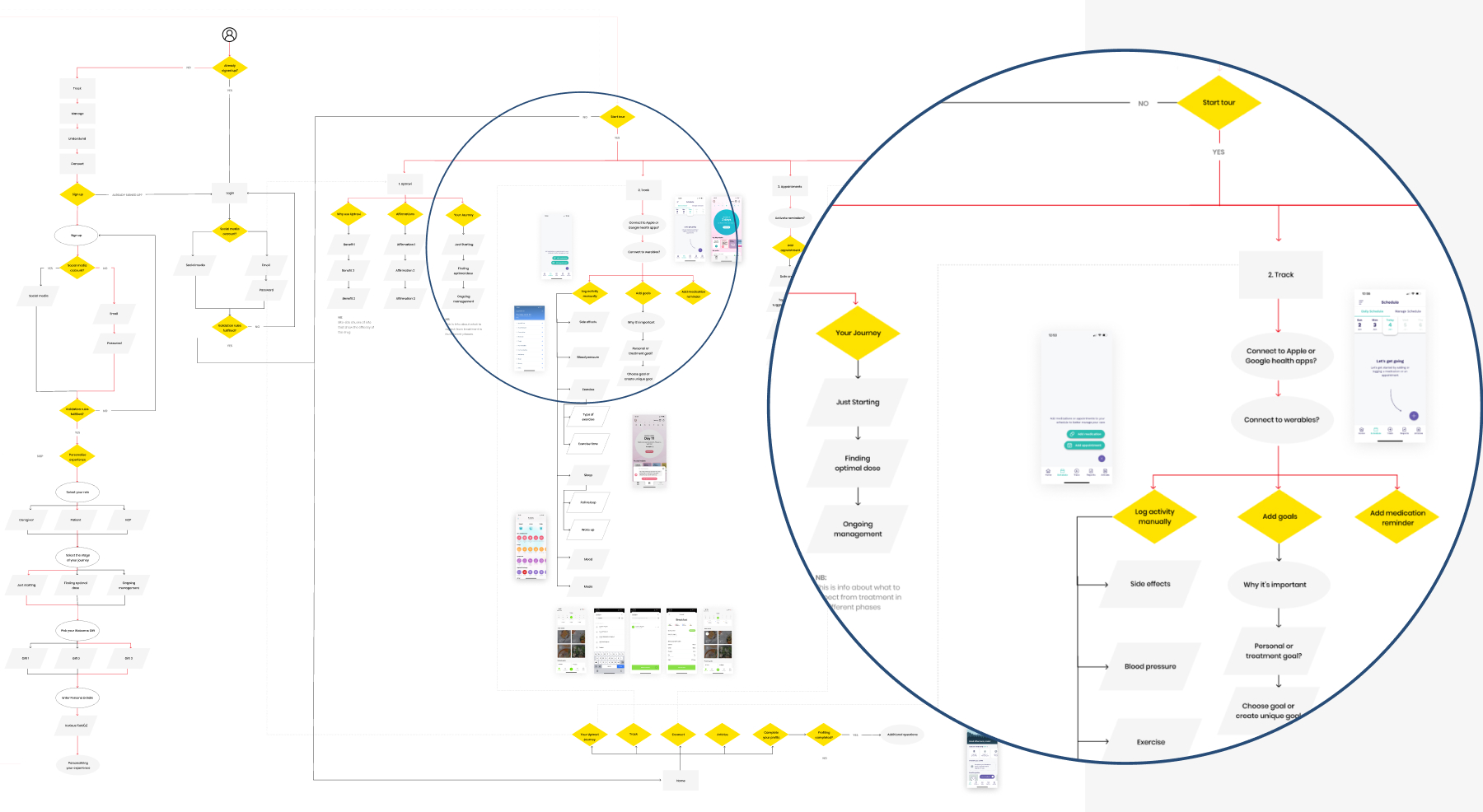
Mapping complex patient support and treatment journeys
Outcome
The concept successfully demonstrated how digital tools could improve communication, self-awareness, and support for patients undergoing complex treatment journeys.
Although budget constraints paused further development, the proof of concept validated the approach and highlighted future opportunities, including wearable integration and deeper longitudinal tracking. The project reinforced the potential for thoughtfully designed technology to support both patient wellbeing and clinical decision-making.
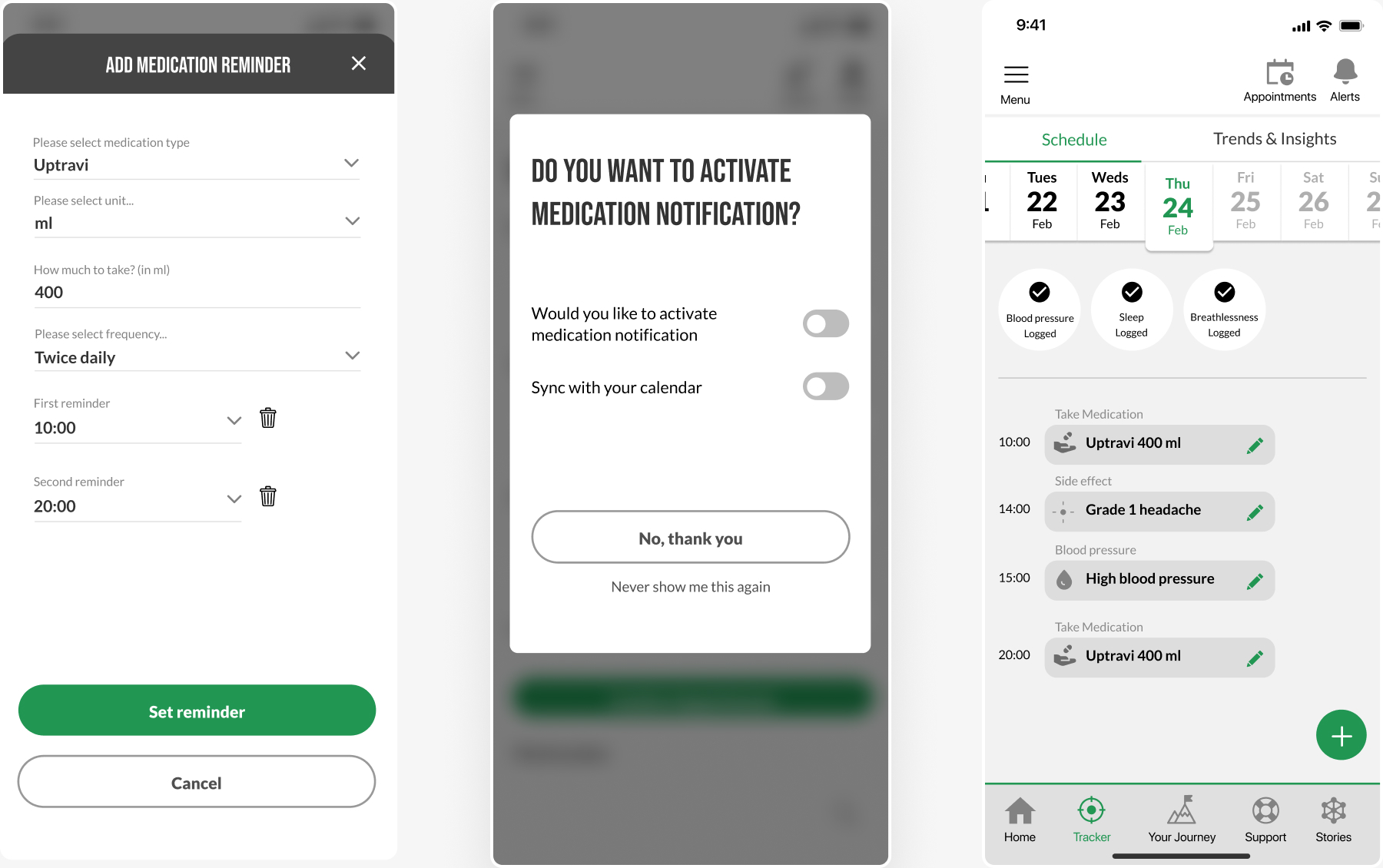
Guided task flows for treatment and support actions
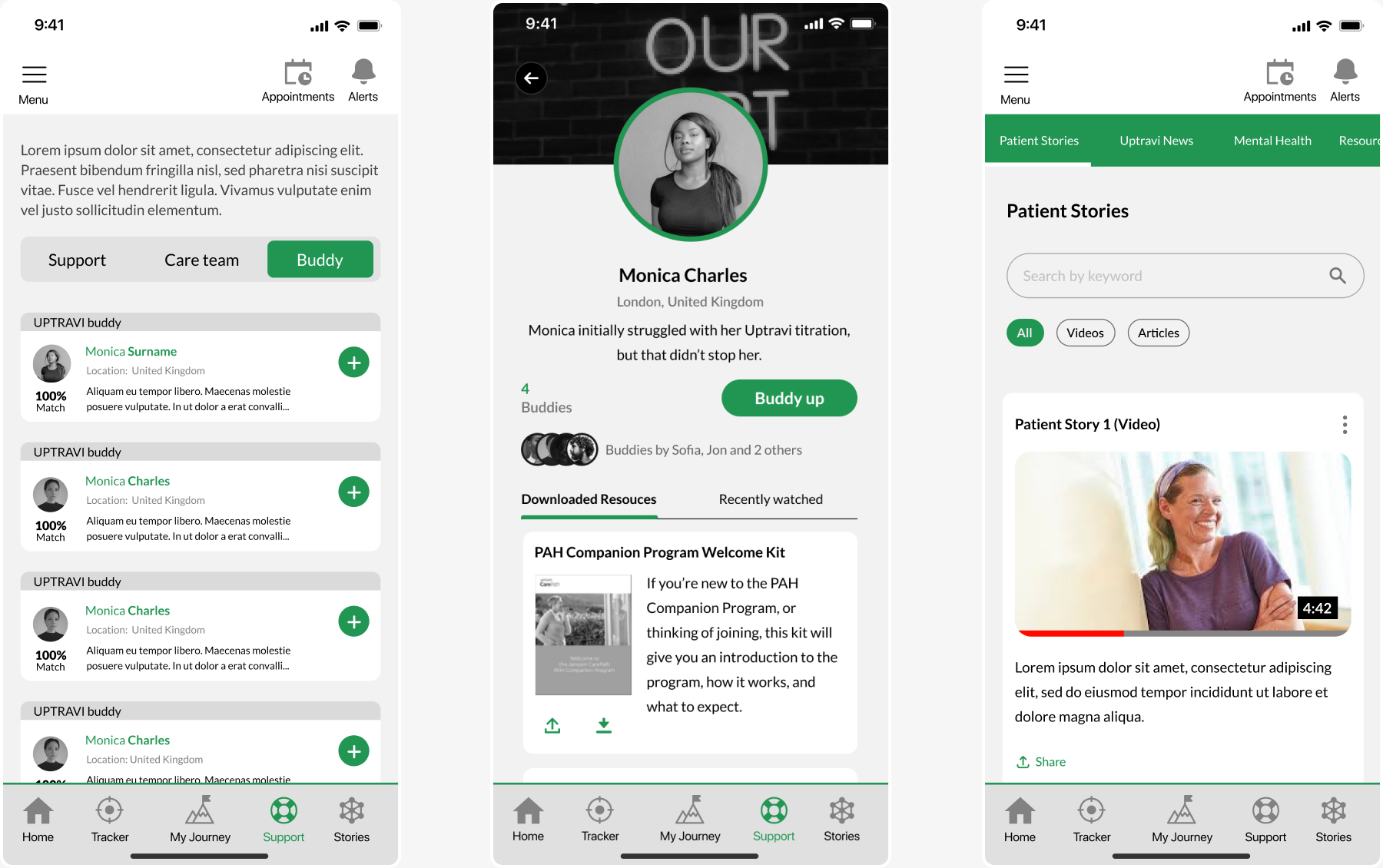
Personalised tracking and patient control settings
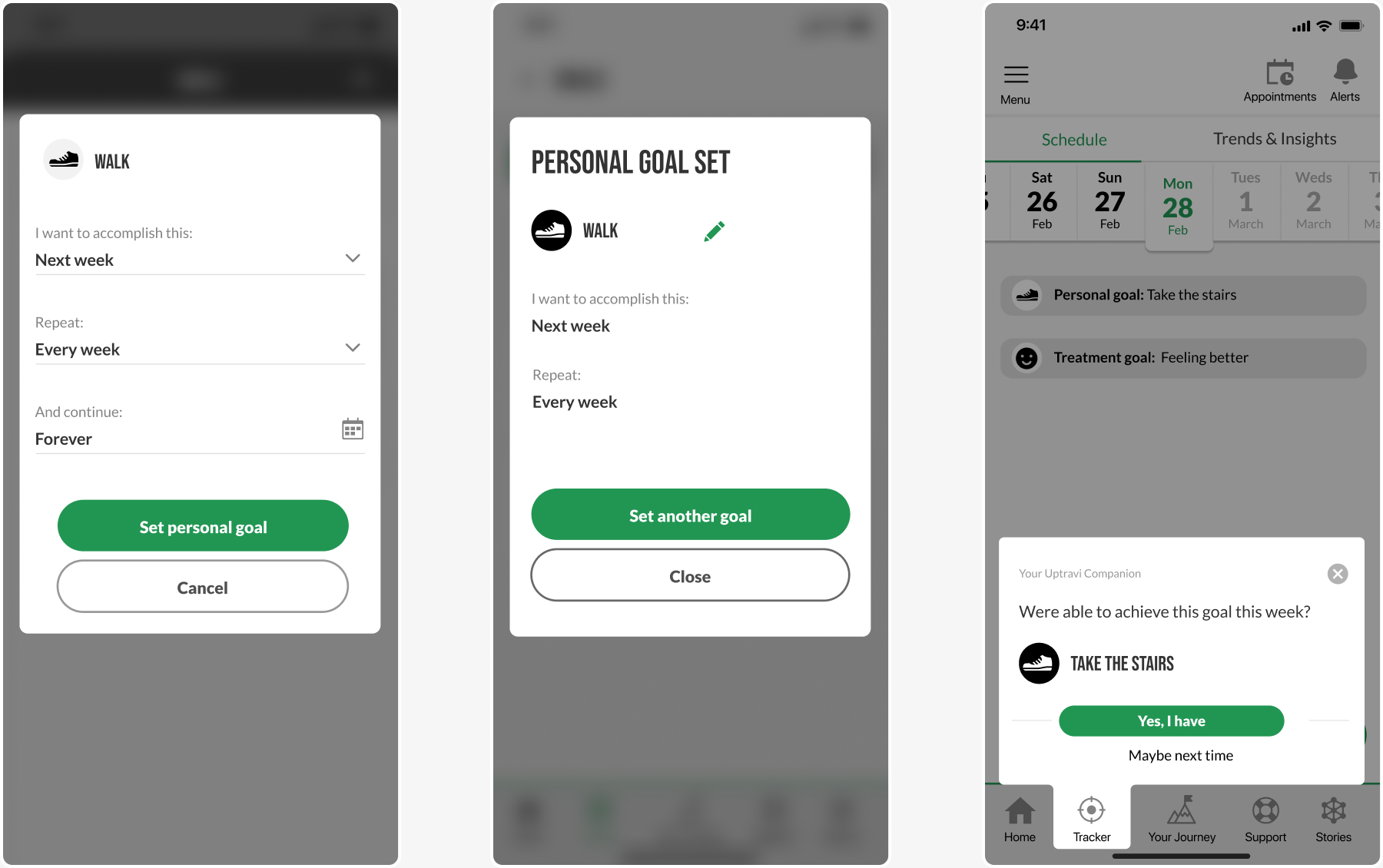
Medication tracking and adherence monitoring